


Booking Holdings is launching a new Seattle-based travel startup called Vayo, led by serial entrepreneur Mike Fridgen, betting that AI agents built for travel can do a better job of planning and managing trips than general-purpose assistants from the likes of OpenAI and Meta.
The travel giant — parent of Booking.com, Priceline, Kayak and OpenTable — says it plans to invest $100 million in the venture, depending on Vayo’s progress and market conditions.
Vayo, which is opening a waitlist for a free private beta Wednesday, offers AI agents that connect to a user’s inbox to pull in flight, hotel and restaurant confirmations. They then monitor the bookings for price drops, openings at sold-out hotels and other changes.
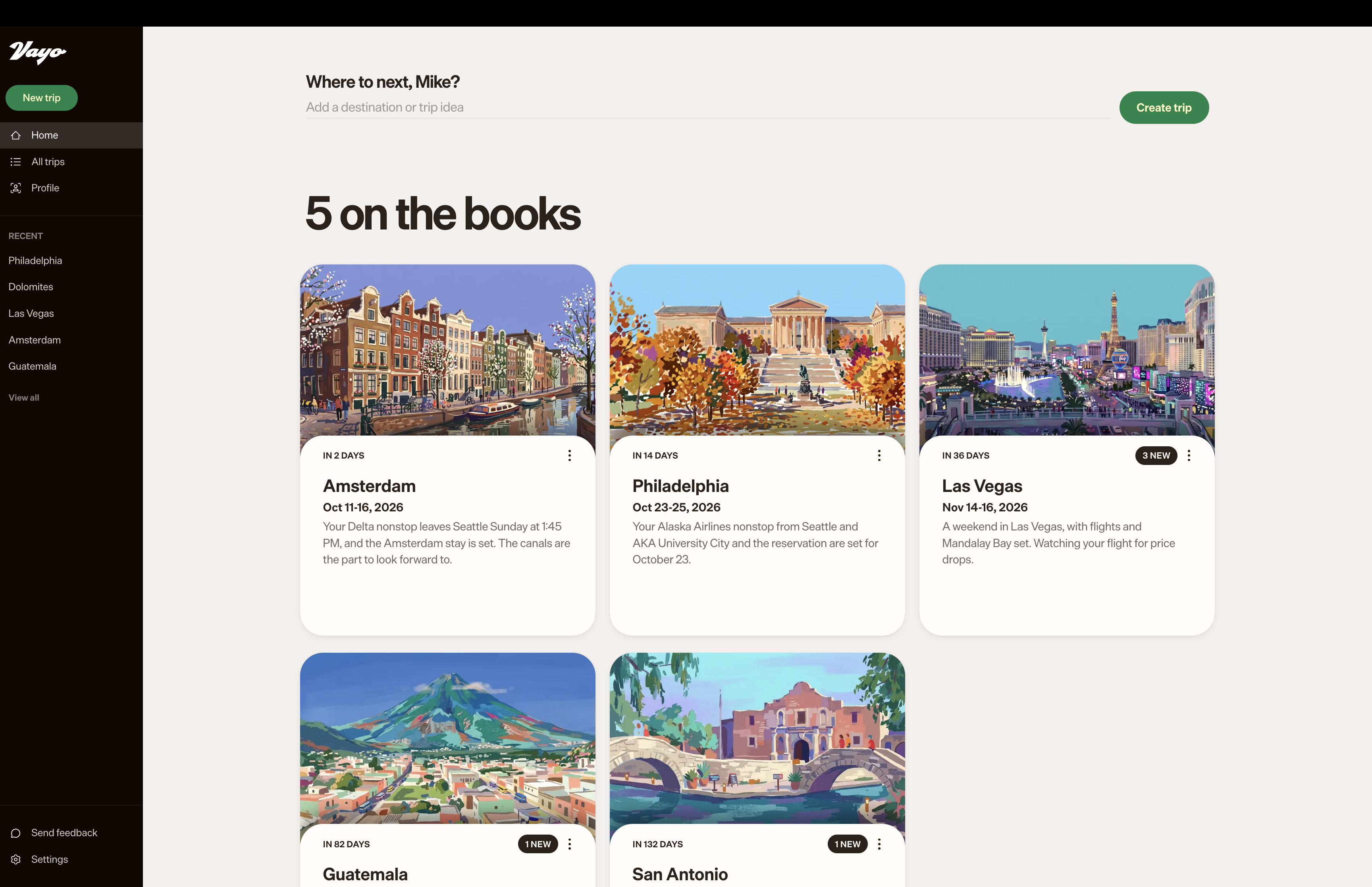
If a flight is delayed, Vayo flags what that means for the hotel check-in or dinner reservation. It also recommends restaurants and activities based on past trips. Vayo users can make restaurant reservations now, with flight and hotel booking expected in the next few weeks.
The venture is part of a broader effort by Booking Holdings to adapt to the rise of AI agents. Big tech companies and startups are developing general-purpose agents that can plan trips and make bookings, potentially bypassing traditional online travel sites.
The company is pitching Vayo as a personal travel agent “built for trips, not tasks.”
“We are out to build the leading consumer experience in travel — nothing less,” said Fridgen, the company’s CEO and co-founder, who previously led Madrona Venture Labs, the Seattle startup studio, and was CEO of Decide.com, the price-prediction startup acquired by eBay.
Vayo’s website promises neutrality. “Our only agenda is yours,” it says. “Vayo is part of Booking Holdings, but it works for you, not for any one site. If the better room is on the hotel’s own site, or the right stay is on another platform, that’s where Vayo will send you.”
A return to travel: It’s the latest travel venture for Fridgen, who was on the founding team of Expedia’s vacation-package business, co-founded travel startup TripHub, led Alaska Airlines’ digital business and was founding head of product at Farecast, the airfare-prediction startup acquired by Microsoft, after which he led Bing’s travel and shopping search businesses.

Vayo’s CTO and co-founder is Allen Chen, who was previously CTO of Fanatics Collectibles and before that a partner in Boston Consulting Group’s AI practice. A serial entrepreneur himself, Chen co-founded two Seattle software startups, CloudPress and DataBlade, which were acquired by News Corp. and BCG, respectively.
The startup’s head of growth is Ian Fliflet, the former chief growth officer at OfferUp, the mobile marketplace for buying and selling used goods locally. Fridgen said Fliflet helped build OfferUp’s growth from the start and was at the top of his list for the role.
Vayo has about 20 employees, all working in person in downtown Seattle, and has been building the product for about six months. The company’s name is pronounced VAY-oh, as in “vacation.”
For Booking Holdings, the new venture marks a return to Seattle, home to its biggest rival, Expedia Group. Booking.com opened a Seattle office in 2012 and moved it to Bellevue the following year, with plans for as many as 350 jobs. It closed the Bellevue office in 2020, amid the pandemic.
A startup inside a giant: Given the team’s entrepreneurial experience, why build inside a travel giant instead of raising venture capital for an independent startup? For one thing, the arrangement gives Vayo access to Booking Holdings’ travel inventory, infrastructure and capital, while letting the team operate like a startup, Fridgen said in an interview.
Vayo has a unique opportunity to succeed with the backing of the world’s largest online travel company in “a very crowded, very noisy category with a lot of competitors,” he said.
Fridgen was already working on a consumer travel idea when his plans lined up with Booking Holdings’ interest in investing in new ventures. “It was really a meeting of the minds,” he said.
In a footnote in its news release, Booking Holdings said the $100 million investment will be “subject to continued advancement of the product and market conditions.” Fridgen said Vayo’s team will share in the value it creates, without giving details on the ownership structure.
Booking Holdings is also backing Lola, a separate AI startup from Kayak co-founders Steve Hafner and Paul English, which launched last month. “It’s a portfolio approach,” Fridgen said, describing Lola as focused on everyday experiences, such as things to do on a weekend at home, while Vayo is “mile-deep in travel scenarios.”
In a statement, Booking Holdings CEO Glenn Fogel described travel as one of the most complex consumer experiences, with too much of the work still falling on travelers to manage.
Fogel said he’s confident in the Vayo team “and their ability to move with purpose, capitalize on early learnings and adapt at pace as they explore what the next generation of personalization in travel can look like.”
How it works: Vayo is initially targeting frequent leisure travelers who plan trips for family and friends, often in Google Docs, Notion or spreadsheets. That group makes up about 5% of travelers but roughly 30% of travel spending, Fridgen said.
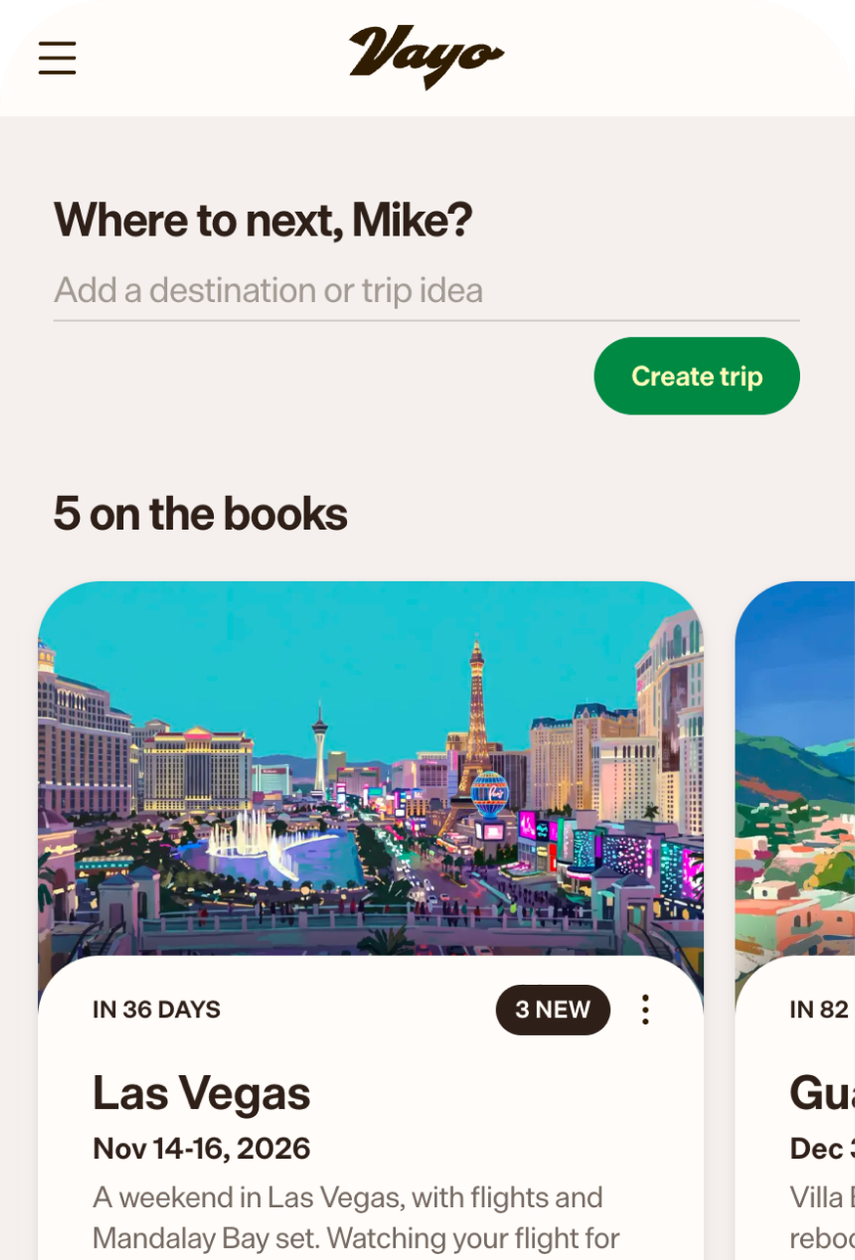
In a demo, Fridgen showed how Vayo built his upcoming trips — to Amsterdam, to Philadelphia to visit his son in college, and to Guatemala for the holidays — within about a minute of connecting to his email. The company says Vayo reads only travel confirmations, not the rest of a user’s inbox.
In this demo video, Vayo plans a trip to Japan, landing a hard-to-get dinner reservation, repricing the flights to save $180 and booking a room at a sold-out hotel when one opens up. (Vayo Video)
Vayo also looks for patterns. For example, it noticed that Fridgen travels to Philadelphia every March, during his son’s sports season, and suggested a mountaineering trip after he climbed Mount Rainier with his daughter this summer.
When the fare dropped on one of his Alaska Airlines flights, Vayo automatically captured the difference as a credit and notified him, Fridgen said. For hotels, it currently prompts users to rebook. During the demo, he reserved a restaurant table through OpenTable without leaving Vayo.
Behind the scenes, Vayo runs numerous AI agents at once, using different models for different jobs. “At any given moment, we have all of these agents working on a user’s behalf,” Chen said. “We are picking the best models that are best suited for those tasks.”
The company has built its own system on top of off-the-shelf AI models, but Chen said the company will probably need its own custom models for some tasks soon.
Vayo connects directly with Booking Holdings brands including Booking.com, Kayak and OpenTable, and has signed a partnership with ticketing platform SeatGeek. Because it pulls travel confirmations from a user’s email, it can also track bookings made anywhere else, including directly with airlines and hotels.
Fridgen said users will be able to book flights and hotels in Vayo in the coming weeks, followed by features for planning trips with travel companions and a native mobile app.
Vayo is free during the private beta. Fridgen said the company hasn’t settled on a business model. A subscription is one possibility as the startup learns which features people are willing to pay for, he said. Fliflet noted that travel also offers traditional revenue from commissions on bookings.
Agents and platforms: Vayo is entering a crowded field of AI travel apps, including trip planners from startups and the big online travel sites. However, Fridgen said he sees general-purpose personal AI agents — such as Meta’s Muse and fast-growing San Francisco startup Instinct — as Vayo’s main competitors.
A growing number of agents have run into resistance from the sites they use. Amazon blocked Meta’s Muse from its store last month, and Resy locked out a user whose Instinct agent repeatedly pinged the site for a table.
Vayo is taking a different approach, relying on APIs and direct partnerships with travel companies, Fridgen said. Those direct relationships make the service more reliable for customers and avoid the risk of being blocked, he said.
Fridgen said Vayo wants to work with companies across the industry, not just Booking Holdings brands. The startup doesn’t have a direct relationship with Expedia, but is open to one, he said. “The only way this can live up to its promise as an orchestrator of your travel life that you’ll trust is if it has all the options,” he said, “and that’s what we’re going for.”
https://ift.tt/g7PoAIS October 14, 2026 at 01:00PM GeekWire
Post a Comment
0Comments