

Amazon says it will spend more than $1 billion over five years in the U.S. communities where it builds and operates data centers, responding to a growing backlash across the country against the tech industry’s massive AI infrastructure buildout.
The company’s new program, which it calls “Built Together,” will fund free community college, job training, energy upgrades for homes and schools, and other local projects identified by data center communities. It comes on top of more than $1 billion that Amazon says it has given to communities over the past three years.
Amazon also says it will stop using NDAs with government agencies on data center projects, install lower-emission backup generators at new sites, publish its energy and water use each year, and pay enough for power to keep local electricity bills from rising.
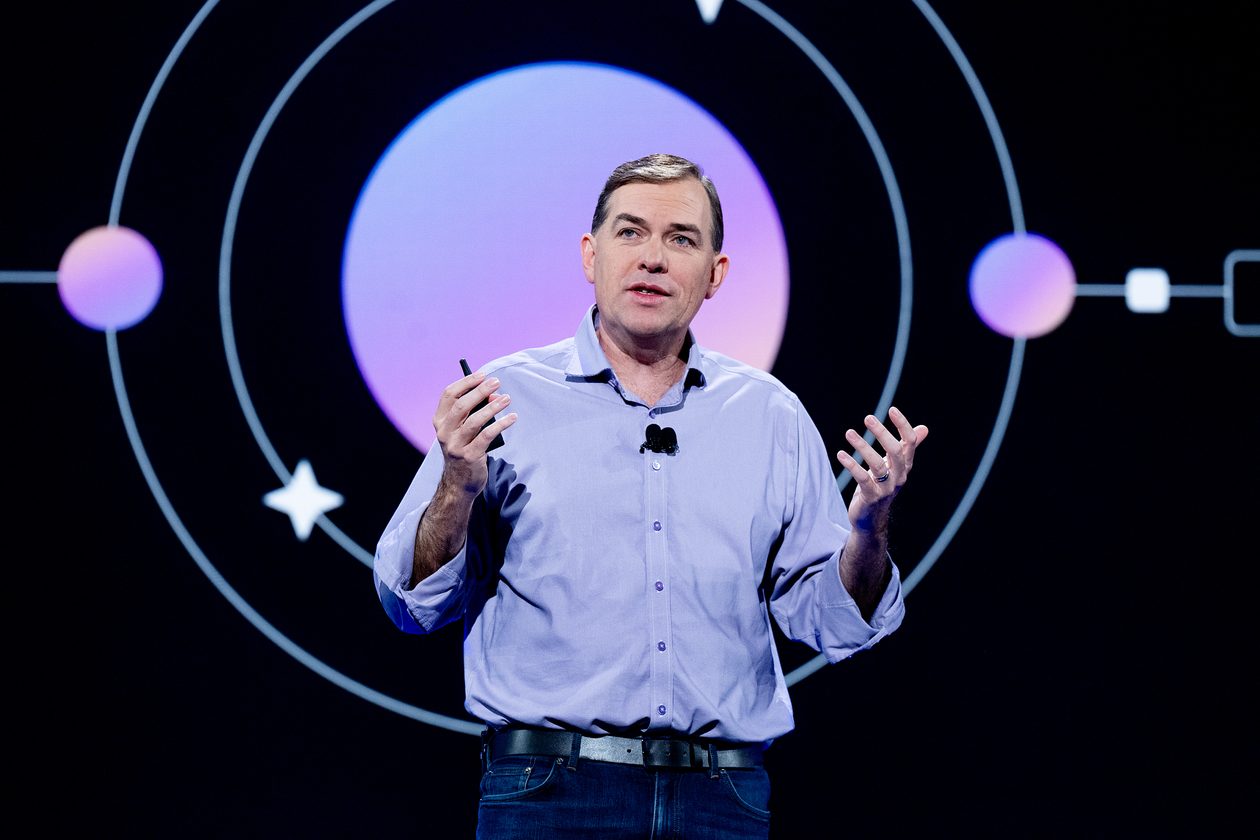
Announcing the commitments in a post Friday morning, Amazon Web Services CEO Matt Garman said local opposition to data centers — which he asserted is stoked by “misinformation and outright lies” — threatens the country’s position in the global race for AI leadership.
“Right now there are over 100 data center moratoriums being considered across the country,” Garman wrote. “If these measures are enacted, the U.S. could be writing its own losing ticket to this race, and the consequences would last generations.”
The business stakes: Amazon is making an unprecedented bet on AI, projecting about $220 billion in capital expenses this year, largely on data centers and chips. That’s more than the cash its business generates on an annual basis.
By comparison, the additional $1 billion in community funding over five years works out to about $200 million a year, or about one-tenth of 1% of this year’s projected capital spending.
Amazon’s AI strategy depends on finding communities willing to host its data centers. Microsoft, Google and other tech giants are spending on a similar scale, to meet current and anticipated AI demand, and they face the same problem.
Local opposition has become a real limit on the AI buildout. At least 75 data center projects worth about $130 billion were blocked or delayed in the first three months of the year alone, according to Data Center Watch, a group that tracks these disputes. An Economist/YouGov poll in late August found that 63% of Americans would oppose a data center in their community.
Pushing back on the narrative: Much of Garman’s post is a point-by-point rebuttal of what he calls myths about data centers.
He called it “false” that data centers are sucking up all the water in communities, “misleading and convenient scapegoating” to blame them for driving up all electricity rates, “untrue” that their backup generators emit huge amounts of pollution, and “false” that communities get nothing in return.
Amazon’s average data center uses less than 13,000 gallons of water a day, he wrote, and backup generators sit idle 99.9% of the time. Where electricity rates are rising, he attributed it primarily to an aging grid.
Garman pointed to “widespread reports of various countries intentionally seeding misinformation in the U.S. about data centers to trick us into slowing down.” OpenAI and X have each reported China-linked accounts posting about data centers.
However, PolitiFact reported last month that the role of foreign influence in the opposition to data centers has been exaggerated, with little sign the accounts reached a wide audience.
“We understand why there is apprehension in some communities where data centers are being built,” Garman wrote. At the same time, he said Amazon and other data center operators have already taken many steps to address those concerns.
The new commitments, he wrote, are a way to codify the company’s existing practices.
Where Amazon and Microsoft differ: Microsoft promised in January not to seek local tax breaks for its data centers. Asked by GeekWire whether it would do the same, Amazon did not make that commitment. The company said it is the largest taxpayer in almost every community where it operates, and that local governments offer incentives to attract its projects.
In his post, Garman pointed to St. Joseph County, Ind., where he wrote that Amazon is expected to pay more than $3 billion in taxes on land that would have generated $1.2 million under its prior use. In Madison County, Miss., he cited more than 2,300 construction workers now on the job and more than 1,700 operations jobs to come.
In 2023, Good Jobs First, a watchdog group that tracks corporate subsidies, reported that five Amazon data centers in Morrow County, Ore., would receive about $1 billion in property tax breaks over 15 years, which the group called the largest known subsidy in the company’s history at the time.
Microsoft also went further on NDAs, saying in March that it would terminate its existing nondisclosure agreements with local governments. Amazon said its change applies going forward, and that it doesn’t plan to revisit past agreements, most of which no longer apply once a project becomes public.
Power costs: Amazon was among seven companies that signed a White House pledge in March to pay for the power and grid upgrades their data centers require.
The new commitment repeats that pledge, which the company said reflects what it was already doing. Amazon has long structured its power agreements to cover the full cost of serving its data centers, it said, with rates approved by state utility regulators.
In his post, Garman disputed that data centers are to blame for rising electricity rates. Among states with large numbers of data centers, he wrote, rates have risen in some, including Illinois and New York, and fallen in others, including Indiana and Mississippi. He wrote that new grid capacity, funded by the private sector, should lead to flat or lower rates for nearby residents.
However, according to U.S. government data reported by CNBC, residential electricity prices in three states with high concentrations of data centers were up sharply in August 2025 from a year earlier: 13% in Virginia, 16% in Illinois and 12% in Ohio, compared with 6% nationally.
Climate goals: Amazon’s carbon emissions rose 16% last year as the company expanded its data center capacity. Kara Hurst, Amazon’s chief sustainability officer, said at Climate Week NYC last week that the company remains committed to reaching net-zero emissions by 2040.
Garman wrote that Amazon has been the largest corporate buyer of carbon-free energy since 2019. Under the new commitment, the company each year will publish the share of its energy that comes from carbon-free sources.
On water, Amazon says it is committed to returning more water to communities than its data centers use by 2030, and was 75% of the way to that goal as of 2025. Microsoft made a similar pledge in January.
Where the money goes: Amazon’s Built Together program is organized around three areas: education and job training, energy and water, and flexible funding for local priorities.
Addressing questions from GeekWire, Amazon didn’t provide a full breakdown of the $1 billion, but said it expects to put more than $100 million up front into community college endowments and roughly another $100 million into expanding its training centers.
Under the program, Amazon says it will:
- Cover out-of-pocket community college costs for an estimated 300,000 students in data center communities over five years. The company says agreements with 26 colleges are already in the works.
- Build 16 more training centers on or near data center sites, offering free certification programs in skilled trades. Amazon operates three of the centers now and has six more in development.
- Fund energy-efficiency upgrades at more than 300 schools and community buildings and more than 30,000 homes.
- Provide annual funding through local nonprofits and community foundations for projects such as roads, parks and fire equipment, with priorities set by each community.
“Every community is different,” Garman wrote. “What matters most in rural Oregon is not the same as what matters in suburban Virginia or a mid-size city in Ohio.”
The local funding will reflect those differences, he wrote, saying that Amazon is not deciding what communities need but rather “providing resources and letting communities decide.”
GeekWire reporter Lisa Stiffler contributed to this story.
https://ift.tt/bGYKewd October 2, 2026 at 09:05AM GeekWire
Post a Comment
0Comments