

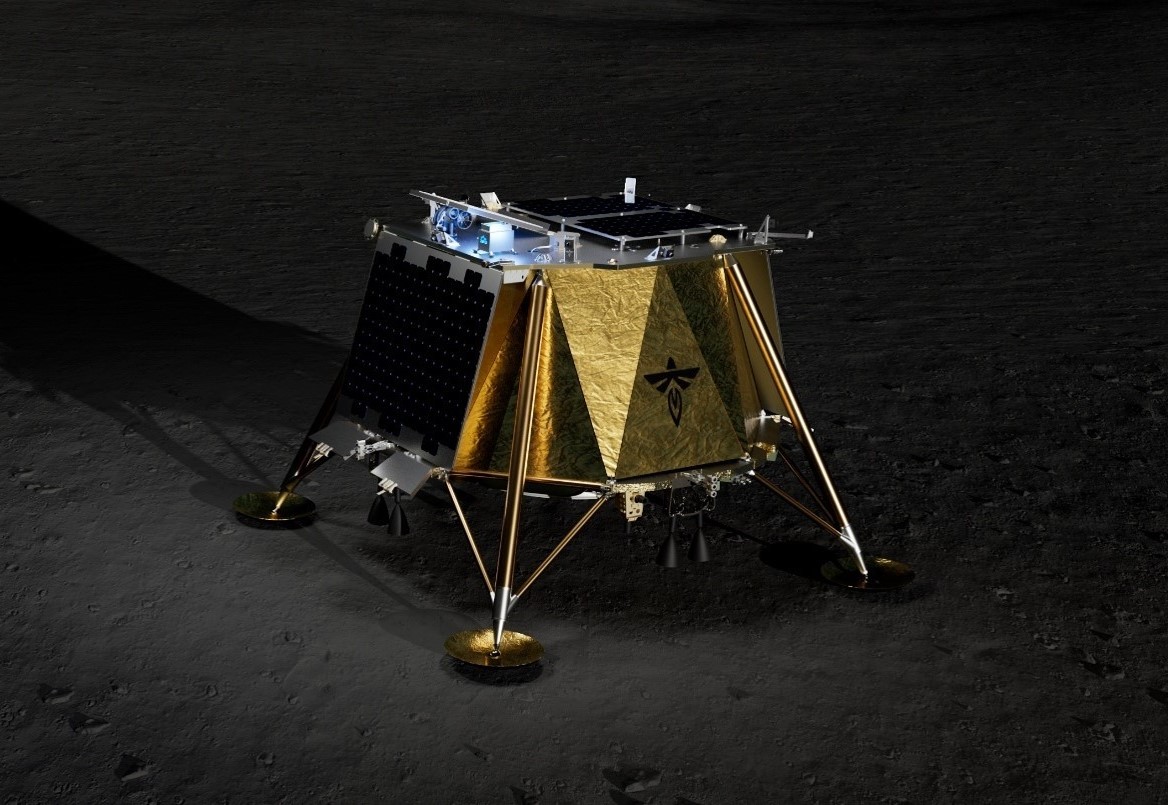
A nuclear-powered heater built by Zeno Power Systems is slated to fly to the moon aboard Firefly Aerospace’s Blue Ghost lunar lander for a demonstration mission that could take place as early as 2028.
Zeno’s Seattle engineering hub played a leading role in developing the radioisotope heater unit, which will be powered by americium-241, a radioactive isotope typically recovered from recycled nuclear material.
The unit will provide 5 watts of thermal energy — enough to sustain the lander through the lunar night, which lasts 14 Earth days. Firefly’s first solar-powered Blue Ghost lander, which touched down on the moon in March 2025, operated successfully through the lunar day but gave up the ghost shortly after sunset.
“Our first Blue Ghost mission gave us firsthand insight into the moon’s extreme thermal environment, where we measured temperatures ranging from more than 230 degrees F during the lunar day to below -275 degrees F at night,” Ray Allensworth, Firefly’s vice president of spacecraft, said today in a news release. “Now we’re looking forward to advancing technologies that can extend missions beyond sunset and support long-duration surface operations required for NASA’s Moon Base initiative and the growing lunar economy.”
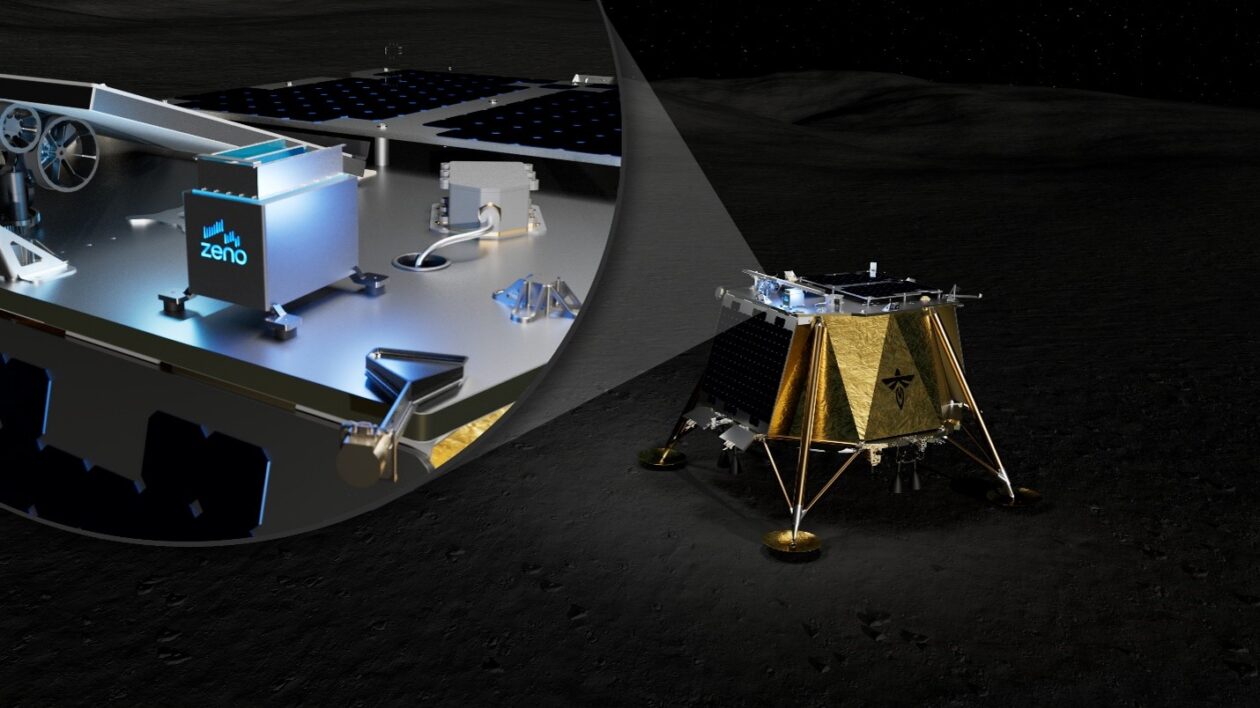
The lander will rely on solar power to run NASA-funded science payloads on the moon’s near side during the lunar day. When night falls, Zeno’s heater unit should be able to keep critical spacecraft components operational.
“Hardware capable of surviving the extreme cold of the lunar night will be essential to enabling sustained operations on the moon,” said Tyler Bernstein, CEO and co-founder of Zeno Power. “NASA’s Moon Base program has identified the need for technologies such as radioisotope power systems to support future lunar exploration, and Zeno is proud to answer that call to demonstrate this capability aboard Firefly’s Blue Ghost mission.”
Firefly has two other lunar lander missions on its manifest: a trip to the moon’s far side scheduled for no earlier than 2027; and a mission targeting a region known as the Gruithuisen Domes, set for 2028 or later.
Beyond radioisotope heater units, Zeno is developing radioisotope power generators to supply electricity for missions on the moon and in extreme environments on Earth. “As demand for long-duration lunar infrastructure grows, we are building the production capacity to support future commercial and government missions,” Bernstein said.
In addition to its Seattle engineering hub, Zeno maintains facilities in Washington, D.C., and California. The company reported the completion of a $50 million Series B funding round in May, followed by a $3.6 million funding extension from Seraphim Space.
“Zeno has raised $105 million to date in private investment and has 95 employees,” Kelsey Bates, the company’s communications manager, told GeekWire in an email. The Seattle hub accounts for the largest proportion of those employees.
https://ift.tt/ALMen8k August 19, 2026 at 12:00PM GeekWire
Post a Comment
0Comments